Your Most Valuable Patients — 45 to 60 Year Olds — Are the Ones Using AI to Find Doctors Most. Did You Know That?
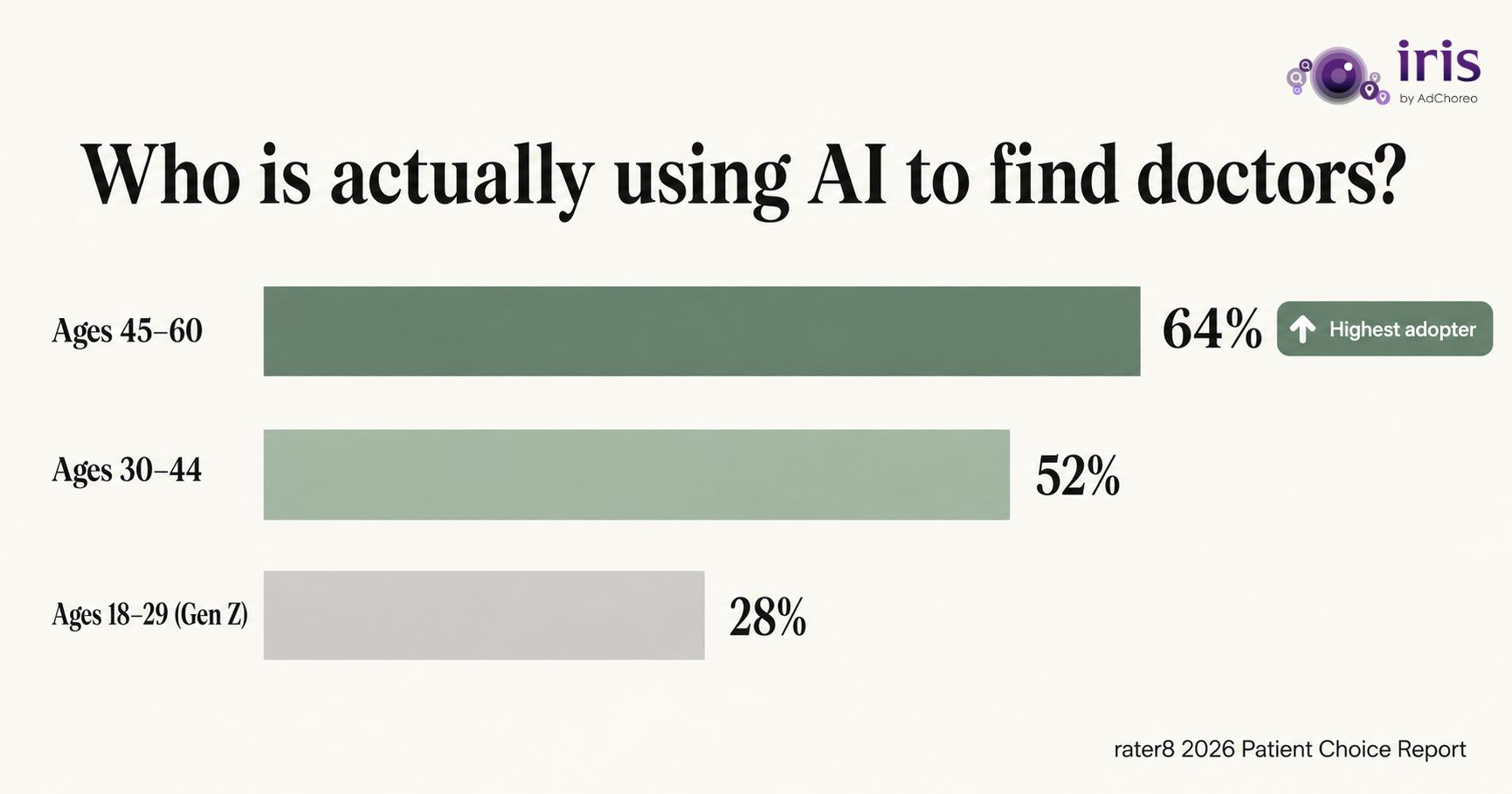
Every conversation about AI adoption assumes the same story: younger people lead, older people lag. Most clinic owners making decisions about AI visibility investment have some version of this in the back of their mind — "our patients are older, so AI search isn't as relevant for us yet." The 2026 rater8 Patient Choice Report dismantles that assumption entirely. 64% of 45–60 year olds have actively used AI to research a healthcare provider — more than any other age group. Gen Z sits at 28%. The assumption isn't just wrong. It's backwards.
Key Takeaways
- 45–60 year olds lead AI healthcare adoption at 64% — more than any other generation, including Gen Z (28%).
- This cohort has the highest healthcare spend — it's the primary patient base for dermatology, orthopaedics, ophthalmology, dental implants, and aesthetics.
- The mechanism isn't intent — it's exposure. Most Google health searches trigger AI Overviews automatically; older patients search for health topics more frequently, so they encounter AI more often.
- The content this cohort needs is specific — credentials, subspecialty expertise, recovery expectations, implant longevity — not generic condition explainers.
- Absence registers as a quality signal. If a 45-year-old's AI research surfaces two competitors but not you, they don't conclude you're invisible online — they conclude you're less established.
Why This Age Group Leads — The Mechanism Explained
The 64% figure seems counterintuitive until you look at why it's happening. rater8's report points to a key insight: many patients aren't actively choosing AI — they're encountering it because most Google health searches now automatically trigger AI Overviews at the top of results.
Who searches for health information most frequently? The 45–60 cohort — because they have more active health concerns:
- Chronic conditions beginning to emerge
- Elective procedures being seriously considered for the first time
- Specialist consultations being sought without a GP directing them
- Second opinions being researched before committing to treatment
More health searches means more AI Overview encounters. More AI Overview encounters means more AI-shaped understanding of treatments, providers, and options. The demographic Google shows AI Overviews to most is the demographic that searches for health information most. That's not Gen Z.
"AI Overviews are now the most trusted section of Google search results for patients researching doctors — trusted by 37% of patients, compared to 20% for organic blue links." — rater8, 2026 Patient Choice Report
The Revenue Implication Most Clinics Are Missing
The 45–60 demographic isn't just your most AI-influenced patient group — it's typically your highest-value one. Consider where this cohort concentrates in clinical specialties:
- Ophthalmology: cataract surgery, premium IOLs, refractive lens exchange peak in this cohort.
- Orthopaedics: joint replacement, sports injury management — active enough to injure, old enough that it doesn't self-resolve.
- Dermatology: anti-ageing treatments, skin cancer screenings, pigmentation management.
- Dentistry: implants, periodontal treatment, cosmetic cases skew heavily 45+.
- Aesthetics: anti-ageing injectables, laser resurfacing, body contouring — predominantly booked by this cohort.
A clinic that assumes AI search is primarily a younger-patient acquisition channel is making a strategic error about who is already evaluating their options through AI right now.
What This Cohort Specifically Looks For in AI Responses
The 45–60 patient uses AI differently from younger patients. They're not asking "does this condition exist?" They're at a more advanced stage of consideration:
- "What treatment is most appropriate for someone my age and health status?"
- "What are the recovery expectations for a 52-year-old with this presentation?"
- "What questions should I ask at my first consultation?"
- "What credentials should I look for in a specialist for this procedure?"
That means the AI-citable content capturing this cohort is specific, credentialed, and outcome-oriented:
- Clinician bios with fellowship training and subspecialty expertise in Person schema
- Procedure descriptions that address age-related considerations, not generic overviews
- FAQ content that answers the specific questions older patients bring to consultations
- Recovery timelines, implant longevity, repeat treatment intervals — the practical specifics this cohort researches
What Absence Looks Like From the Patient's Perspective
The 45–60 patient is a thorough researcher. When their AI research surfaces credible, specific information about two clinics — and nothing about a third — they don't conclude the third is equally good but less visible. They typically conclude the third clinic isn't as specialised, or isn't as established. Absence registers as a quality signal, not a technology gap.
This patient cohort also has the highest tendency to respond to review responses. rater8's data shows 66% of patients say a provider's response to reviews directly influences their trust — up 24 percentage points in a single year. For the 45–60 patient landing on your Google listing and seeing unanswered reviews, the implication is inattentiveness. Combined with an absent AI Overview presence, that's two trust signals working against you.
If your clinic has been deprioritising AI visibility investment on the assumption that AI search is a young-patient channel, you now have the data to revisit that assumption. The free Iris agentic readiness audit takes 60 seconds and shows you exactly what your highest-value patient cohort finds — and doesn't find — when they search for a clinic like yours.